
Sub-Total: RM0.00


Fingerprint vs Face Recognition Digital Lock: How to Choose for Your Malaysia Home
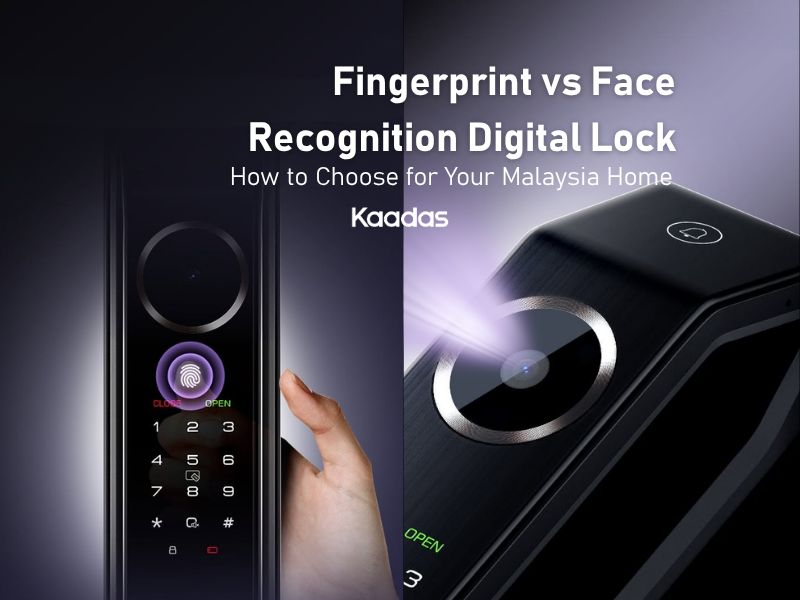
The two most popular biometric access methods on Kaadas digital locks are fingerprint scanning and face recognition. Both are fast, both eliminate the need for a physical key, and both are suitable for Malaysian homes. The difference comes down to specific household situations — and knowing which one fits your daily routine makes the decision straightforward.
How Fingerprint and Face Recognition Digital Locks Work?
How Fingerprint Scanning Works
The Kaadas fingerprint door lock range uses Sweden FPC (Fingerprint Cards AB) capacitive sensors — the same sensor technology used in premium smartphones and access control systems. The sensor reads the unique ridge pattern of your fingertip and stores a mathematical template, not an image. Recognition is near-instant.. Most models store up to 100 fingerprints, plus up to 50 faces on face-recognition models, making them practical for families of four to six people with multiple registered fingers.
The main limitation in Malaysia’s climate is moisture. Wet fingers from rain or hand-washing can reduce scan accuracy, requiring a second attempt. All Kaadas fingerprint models include a PIN code backup to handle this situation immediately.
How Face Recognition Works
Kaadas 3D face recognition uses infrared depth sensing to map the three-dimensional geometry of a face, not a flat photograph. This means it works at night, in low light, and at angles — and it cannot be spoofed with a photo on a phone screen because the sensor reads depth, not just surface appearance.
Recognition distance is typically 30 to 80 cm from the panel, with an unlock time under 0.6 seconds. The infrared system is not affected by Malaysian weather conditions. For a full overview of how face recognition compares to other entry methods, is face recognition for you? covers the decision in detail.
Why Not Both? Locks That Offer Fingerprint and Face Together
You do not have to pick a side. Several Kaadas models carry both biometric methods on the same lock, so each member of the household can use whichever suits them.
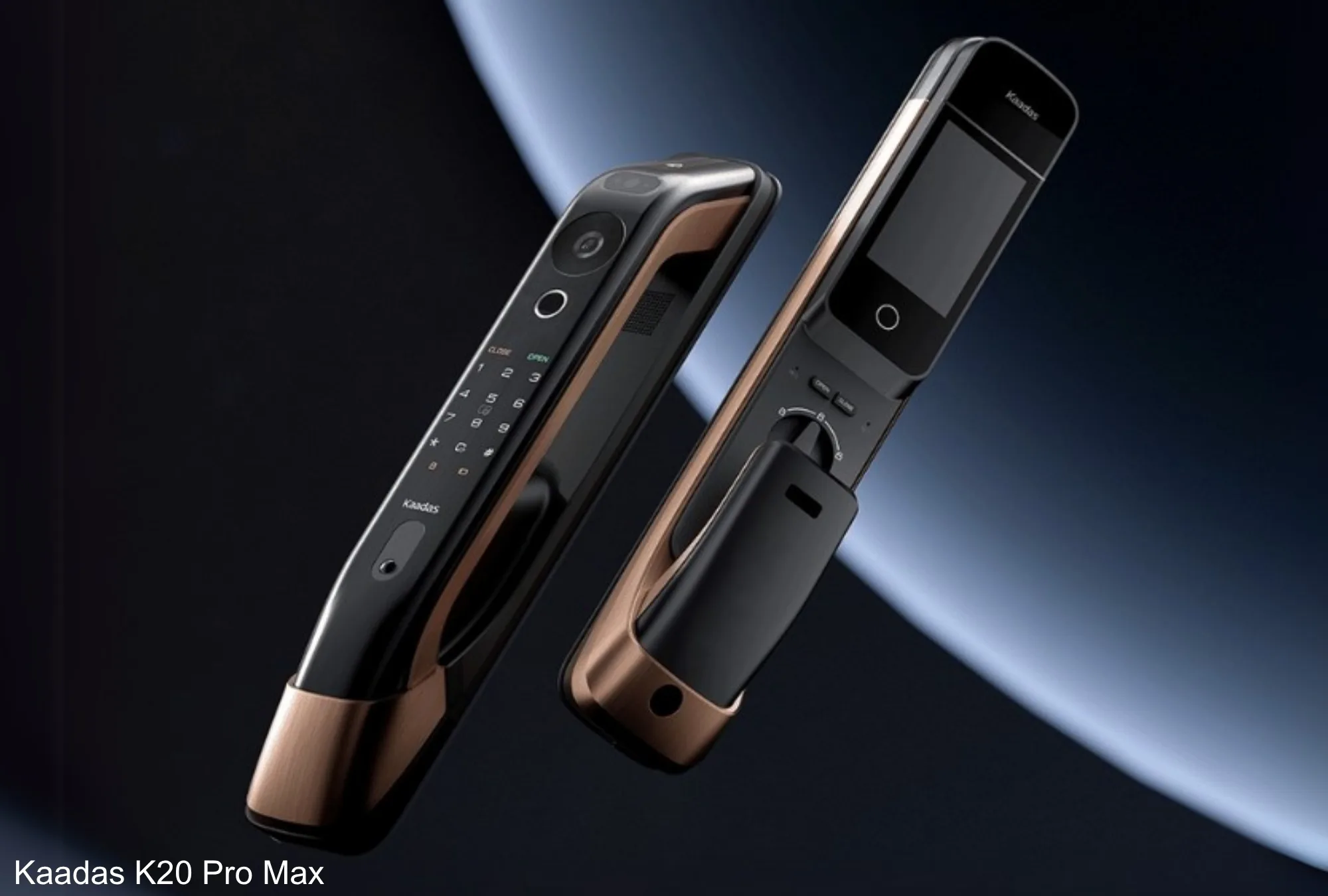
The premium K20 Pro Max, K70SE and P30 Pro Max all pair 3D face recognition with the Sweden FPC fingerprint sensor, as does the mid-range K19F. The Q9 goes one step further: alongside face and fingerprint, it adds finger vein recognition, the only Kaadas model to do so, reading the vein pattern beneath the skin for an extra layer of accuracy. On these locks you might register Dad’s fingerprint, set up face recognition for the kids, and keep a PIN as a shared backup, all on one door.
For Malaysian homes where the whole family comes and goes at different times, having two reliable methods on one lock removes the daily friction.
Head-to-Head: The Key Differences
Wet hands: fingerprint may require a retry in heavy rain; face recognition is unaffected. This is a real consideration for Malaysian homes where occupants enter directly from the garden or carpark.
Young children and elderly users: children under five may have fingerprints too small or inconsistent for reliable scanning. Some older adults find precise fingerprint placement difficult if fingertips have worn smooth with age. Face recognition is the more reliable option for both groups.
Hygiene: face recognition is touchless, which reduces surface contact.
Price: fingerprint models are priced lower than face recognition models within the Kaadas range. The premium for face recognition reflects the additional hardware and processing required.
Household capacity: both methods scale to a family. A typical Kaadas face-recognition lock stores up to 50 faces and up to 100 fingerprints, plus separate PIN users and RFID cards, so there is room for everyone at home, including helpers and regular visitors, without running out of slots.
Which Should You Choose?
For most Malaysian families, a fingerprint digital lock is the right starting point. It is fast, reliable for adults, and the Sweden FPC sensor handles the majority of daily access scenarios without issue. The PIN backup handles edge cases.
If your household includes young children, elderly parents, or anyone who finds precise fingerprint placement consistently difficult — or if you want the convenience of hands-free entry when carrying groceries — face recognition is worth the additional cost. The 3D infrared sensing removes almost all the failure modes that frustrate users of basic biometric systems.
For an overview of all available access methods — including PIN, card, key, and app control — the different access modes guide explains each option and when each is most useful.
Whichever method you lead with, you are never relying on it alone. Kaadas locks back up biometrics with a PIN code, an RFID card and the app, and the mortise models add a mechanical key, so a wet fingertip or an awkward angle never leaves you stuck at your own door. Every lock is also covered by a 2-year onsite warranty, extendable to a third year, with free delivery and installation across the Klang Valley.