
Sub-Total: RM0.00


The Ultimate Guide: Installing Digital Locks on Wooden Doors in Malaysia

Will a Smart Lock Fit My Door?
It is the number one question on the minds of homeowners across Malaysia: “I want to upgrade to keyless entry, but will this digital lock actually fit my existing wooden door?”
The good news is that Kaadas digital locks are designed with versatility in mind and are compatible with most of standard wooden doors in Malaysia. However, transforming a traditional door into a high-tech security gateway requires precision. Before making a purchase, it is vital to understand the basic anatomy of your door and the technical requirements of a smart lock.
This comprehensive guide will walk you through the essential pre-installation checklist, explain the difference between lock types, and show you why professional installation is the key to long-term reliability.
Part 1: The Pre-Installation Measurement Checklist
To guarantee a perfect, seamless fit, grab a measuring tape and check these four critical dimensions on your wooden door:
1. Door Thickness
The most important metric. A digital smart lock is significantly heavier and more complex than a standard mechanical knob. It contains a mortise lockcase that houses the heavy-duty locking bolts, which must sit securely inside the wooden core of your door.
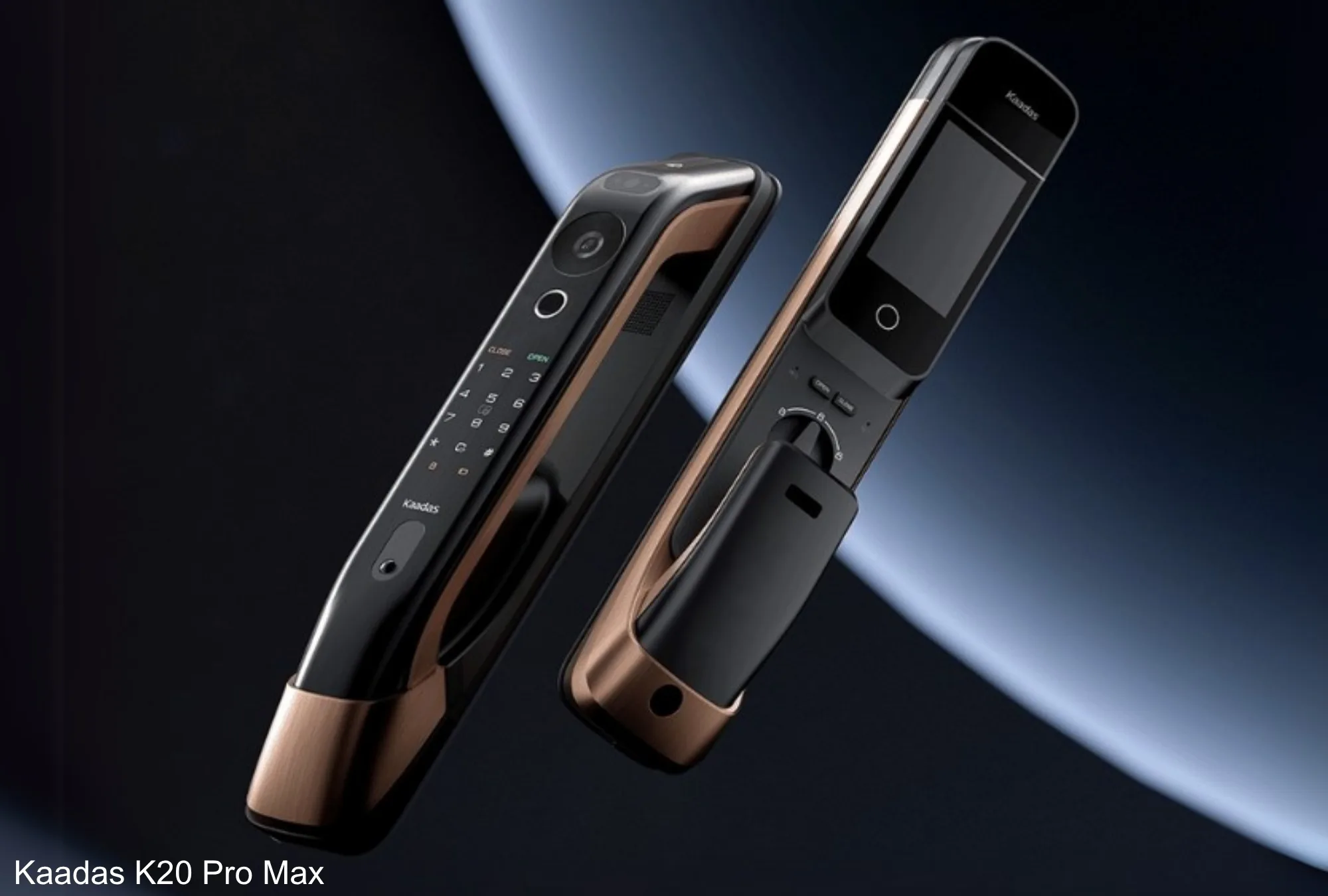
- The Standard Requirement: For mortise-style smart locks (like the Kaadas K20 Pro Max or Q9), your wooden door must be between 38mm to 120mm thick.
- What if it’s thinner? If your door is between 35mm and 40mm, you may need to look at specific rim locks or deadbolt models, as a deep mortise pocket could compromise the structural integrity of a thin door.2
2. The Backset Dimension
The “backset” is a crucial locksmithing term. It refers to the horizontal distance measured from the edge of the door to the exact center of the handle or the lock cylinder hole.
- The Standard Requirement: In Malaysia, the standard backset measurements are 60mm or 70mm.
- The Kaadas Advantage: Our locks are engineered to be highly adaptable, featuring adjustable mortises that accommodate these standard backsets perfectly without requiring excessive drilling.
3. Clearance from the Metal Gate (The “Door Gap”)

This is a uniquely Malaysian challenge. Many landed properties (Terrace houses, Semi-Ds) and older apartments feature a wooden main door set just inches behind a secondary metal grille gate.
- The Problem: Premium digital locks often feature luxurious Push-Pull handles or protruding biometric scanners. If the gap between your wooden door and the closed metal gate is too tight, the smart lock handle will crash into the gate, preventing your wooden door from opening.
- The Standard Requirement: You need a minimum clearance gap of 58mm to 70mm to comfortably accommodate most full-sized Push-Pull smart locks.
- The Solution: Measure the distance from the surface of your wooden door to the inner bars of your gate.2 If space is tight, you can opt for our ultra-slim models, such as the Kaadas R8.
4. Edge Clearance (Striker Area)

You must also ensure there is enough flat, unobstructed surface area on the face of the wooden door. There needs to be adequate clearance from the door’s edge to the end of the lock body (typically around 100mm) so that the lock sits flush against the wood without hanging off the bevel or edge styling.
Part 2: Understanding Lock Types (Mortise vs. Deadbolt vs Rim)

When shopping for a digital lock for your wooden door, you will primarily encounter three types of configurations:
- Smart Mortise Locks: This is the ultimate, all-in-one upgrade. A mortise lock completely replaces your existing door handle and internal locking mechanism. It requires chiseling a deep “pocket” into the edge of the wooden door to house the lockcase. This offers the highest level of security and the cleanest aesthetic. All Kaadas premium models are Mortise locks.
- Smart Deadbolts: Smart deadbolts serve as an “add-on” security feature that sits independently above your existing door handle. These units are installed by drilling a standard circular bore hole through the door, rather than requiring a deep, complex pocket. The mechanism functions by extending a horizontal metal bolt directly into the door frame to provide a sturdy point of resistance. Because they lack an integrated handle, you must first unlock using one of the available access methods, such as fingerprint, PIN code, card, or app control to retract the bolt and then separately turn your original mechanical knob to enter. This makes them an ideal choice for standard doors where you want to maintain your current hardware while keeping costs lower than a full mortise system.
- Smart Rim Locks: Smart rim locks are surface-mounted “add-on” devices that are particularly well-suited for thinner doors or glass-paneled entryways where internal drilling is difficult.The entire locking body of a rim lock is installed on the inner face of the door, latching into a strike plate mounted on the surface of the frame. They are often chosen for budget-friendly setups because they only require a simple hole for the connecting cylinder rather than extensive carpentry. These locks do not include a handle, meaning your entry routine involves unlocking the smart mechanism first and then manually turning your existing door handle to gain access.
Part 3: The Professional Installation Process Explained
While the internet is full of DIY installation videos, installing a high-end mortise smart lock on a solid wooden door is a job best left to the experts. A millimeter of misalignment can cause the locking bolts to grind against the strike plate, leading to rapid battery drain and premature motor failure.
When you purchase a Kaadas lock, our In-House Professional Installers handle the heavy lifting. Here is what happens on installation day:
- Removal and Prep: The technician carefully removes your old mechanical lock and handle, inspecting the existing holes.
- Precision Templating: Using specialised stencils, the installer marks the exact locations for new drill holes and mortise expansion, ensuring the new lock will perfectly cover the footprint of the old one.
- Surgical Woodworking: Using professional-grade routers and chisels, the technician deepens the mortise pocket inside the wooden door. This is done surgically to avoid splintering the wood veneer or damaging the door’s structural core.
- Hardware Mounting: The heavy-duty cast iron mortise is inserted into the door edge. Then, the exterior and interior lock panels are mounted, feeding the electronic communication cables safely through the door cavity to prevent pinching.
- Strike Plate Alignment: The installer chisels the door frame to recess the new strike plate, ensuring the door closes flush and the automated bolts extend and retract effortlessly without friction.
- Calibration and Cleanup: Batteries are installed, and the technician walks you through programming your Master PIN, registering your fingerprints, and connecting the lock to the Kaadas App. Finally, they vacuum up all wood dust, leaving your entryway spotless.
Why Risk It? Choose Professional Precision
A wooden door naturally expands and contracts with Malaysia’s tropical humidity. An improperly installed lock will quickly jam as the wood shifts.
By choosing Kaadas, you aren’t just buying a piece of hardware; you are investing in end-to-end security. Our locks come with Free Professional Installation within the Klang Valley area, backed by a comprehensive 2-Year On-Site Warranty.
Don’t let installation fears hold you back from a smarter, safer home. Contact our team today or visit our Showroom to find the perfect match for your wooden door.